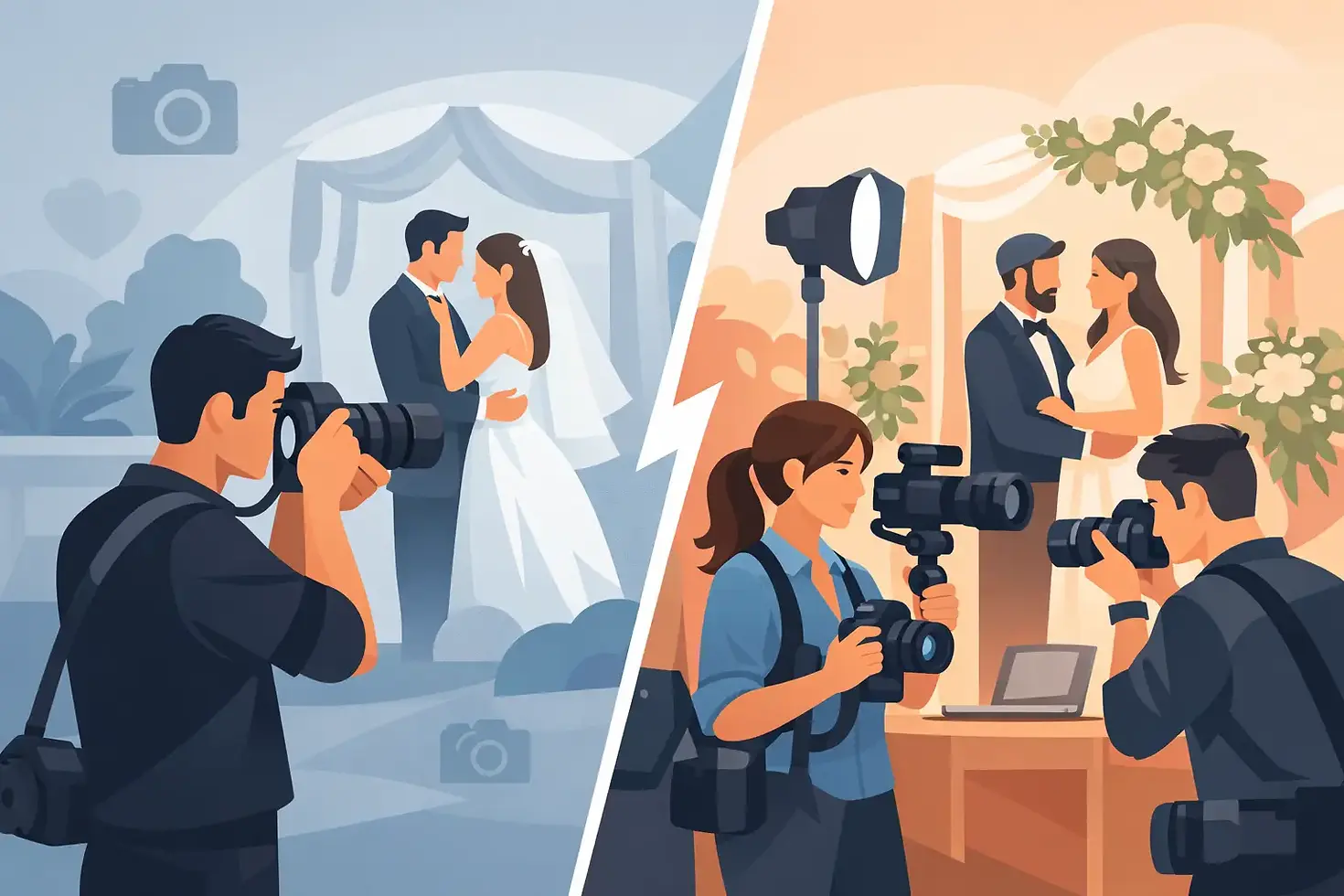
Single Photographer vs Photo Team for Weddings
- jasonimages73
- 3 days ago
- 5 min read
The choice between a single photographer vs photo team often becomes real when you picture the moments you do not want to miss: your partner’s expression as you walk down the aisle, your parents’ quiet reaction from the first row, the laughter unfolding in the cocktail hour while you are taking portraits. Both options can create beautiful wedding images. The better fit depends on the pace, size, and priorities of your celebration.
For many Southern California couples, a two-photographer team offers the breathing room that a full wedding day needs. It is not simply about receiving more photos. It is about preserving more of the story as it naturally happens, without asking your day to slow down for the camera.
What a Single Photographer Does Beautifully
A talented solo photographer can document a wedding with a cohesive eye and a very personal approach. For intimate weddings, courthouse ceremonies, elopements, or celebrations with a simple timeline, one photographer may be exactly right. There is less movement in the room, fewer people to coordinate, and a quieter presence during emotional moments.
Working with one photographer also means every image is shaped through one perspective. That can create a particularly consistent visual rhythm in your gallery, from the soft anticipation of getting ready through your final dance. If your ceremony and reception are in one compact venue, your guest count is modest, and you have allowed enough time for portraits, a single photographer can often cover the day thoughtfully.
The trade-off is coverage. A photographer can only be in one place at a time. When each partner is getting ready in different locations, when the ceremony has a quick pace, or when family and guests are gathering in multiple spaces, certain moments may happen outside that photographer’s view. That is not a failure of skill. It is simply the reality of one person documenting a live event.
Single Photographer vs Photo Team: The Meaningful Difference
A photo team gives your wedding day two sets of eyes, two angles, and more flexibility when the timeline shifts. While the lead photographer focuses on the central moment, the second photographer can capture the reaction that makes that moment even more meaningful.
During the ceremony, for example, one photographer may photograph you exchanging vows while the other documents your parents holding hands, your wedding party smiling through tears, or the wide view of the setting you chose so carefully. During your first look, one can stay close for the emotion while the other captures the scene from a distance, preserving the feeling without interrupting it.
Those additional perspectives matter most because weddings are full of simultaneous moments. As you greet guests during cocktail hour, your partner may be sharing a spontaneous laugh with friends across the patio. While you are on the dance floor, a grandparent may be watching with a look you will want to remember. A team is better positioned to preserve both the headline moments and the smaller, unplanned ones that give your gallery its heart.
A second photographer also helps the day move with more ease. They can photograph reception details before guests enter while the lead photographer finishes family portraits. They can begin documenting one partner’s preparation while the lead photographer is with the other. That division of coverage can reduce rushing, especially at weddings with separate getting-ready locations or travel between venues in Los Angeles and Orange County.
When Two Photographers Are Worth the Investment
A two-photographer package is especially valuable when your wedding has a full timeline, a larger guest list, or several locations. It allows for broader coverage without turning every transition into a race against the clock.
Consider a photo team if you are planning a traditional wedding day with separate preparation, a first look, a ceremony, family portraits, cocktail hour, and a reception. The same is true if you care deeply about candid guest photos, have a large wedding party, or want to preserve extensive cultural traditions that may be happening in different parts of the venue.
Two photographers can also be a thoughtful choice for couples who want a more complete collection of reception memories. Receptions move quickly. Toasts create reactions around the room. Dance floors become lively and unpredictable. A lead photographer can concentrate on the people and moments you specifically requested, while a second photographer documents the energy around them.
This is not about filling your gallery with duplicates. A well-coordinated team works with intention. The lead photographer directs the visual story and key portraits, while the second photographer supports the timeline, finds complementary angles, and notices the moments that might otherwise pass quietly by.
When One Photographer May Be the Right Choice
More coverage is not automatically better for every celebration. If you are hosting a small wedding of 30 guests at one venue, getting ready together, and planning a relaxed dinner afterward, one photographer may give you all the coverage you need. A smaller event often has fewer overlapping moments, and a solo photographer can move through it with care.
One photographer can also suit couples who prefer a very low-profile photography presence. While an experienced team should always work respectfully and discreetly, a single photographer naturally takes up less space. For an intimate ceremony or a private estate wedding where the atmosphere is calm and unhurried, that can feel right.
The key is to be honest about your timeline. A solo photographer can create extraordinary images, but they cannot photograph both partners getting ready at the same time in separate places. They cannot simultaneously capture your processional from the front and your guests’ reactions from the side. If those images matter to you, a second photographer is a practical investment rather than an extra.
Ask These Questions Before You Decide
Start with the story you want to revisit years from now. Do you want your gallery to focus primarily on the two of you, or do you also want a rich record of the people who celebrated beside you? Neither answer is wrong, but it should shape your coverage.
Then look at the logistics. Are you getting ready in separate locations? Is your ceremony site far from the reception? Will formal family portraits need to happen during cocktail hour? Are there meaningful traditions, surprise performances, or multiple events happening at once? The more moving parts your day has, the more a team can protect your experience from feeling rushed.
It also helps to ask a photographer how they divide responsibilities. Will the second photographer be present for the full day or only part of it? How do they coordinate during portraits and ceremonies? Are both photographers experienced in wedding coverage? Clear answers provide more confidence than simply seeing “second photographer” listed in a package.
Finally, consider the finished experience, not only the number of images. Professionally edited high-resolution files, an organized online gallery, print release rights, and a keepsake presentation all affect how easily you can enjoy and share your photographs after the wedding. Coverage is the beginning of the story. The way those memories are edited, delivered, and preserved is what allows them to stay close.
Choose Coverage That Lets You Be Present
Your wedding photographs should not come at the cost of experiencing your wedding. The right coverage allows you to stay in the moment, trusting that the tears, laughter, details, and in-between glances are being handled with care.
At Jason Kim Photography, two-photographer wedding coverage is designed for couples who want both polished portraits and the candid emotion surrounding them. The goal is never to make your day feel staged. It is to create space for real moments while documenting them with intention.
Whether you choose one photographer or a photo team, let your decision reflect the shape of your day and the memories you value most. When you can look back and see not only what happened, but how it felt to be surrounded by the people you love, your photographs become far more than a record of the event.


Comments