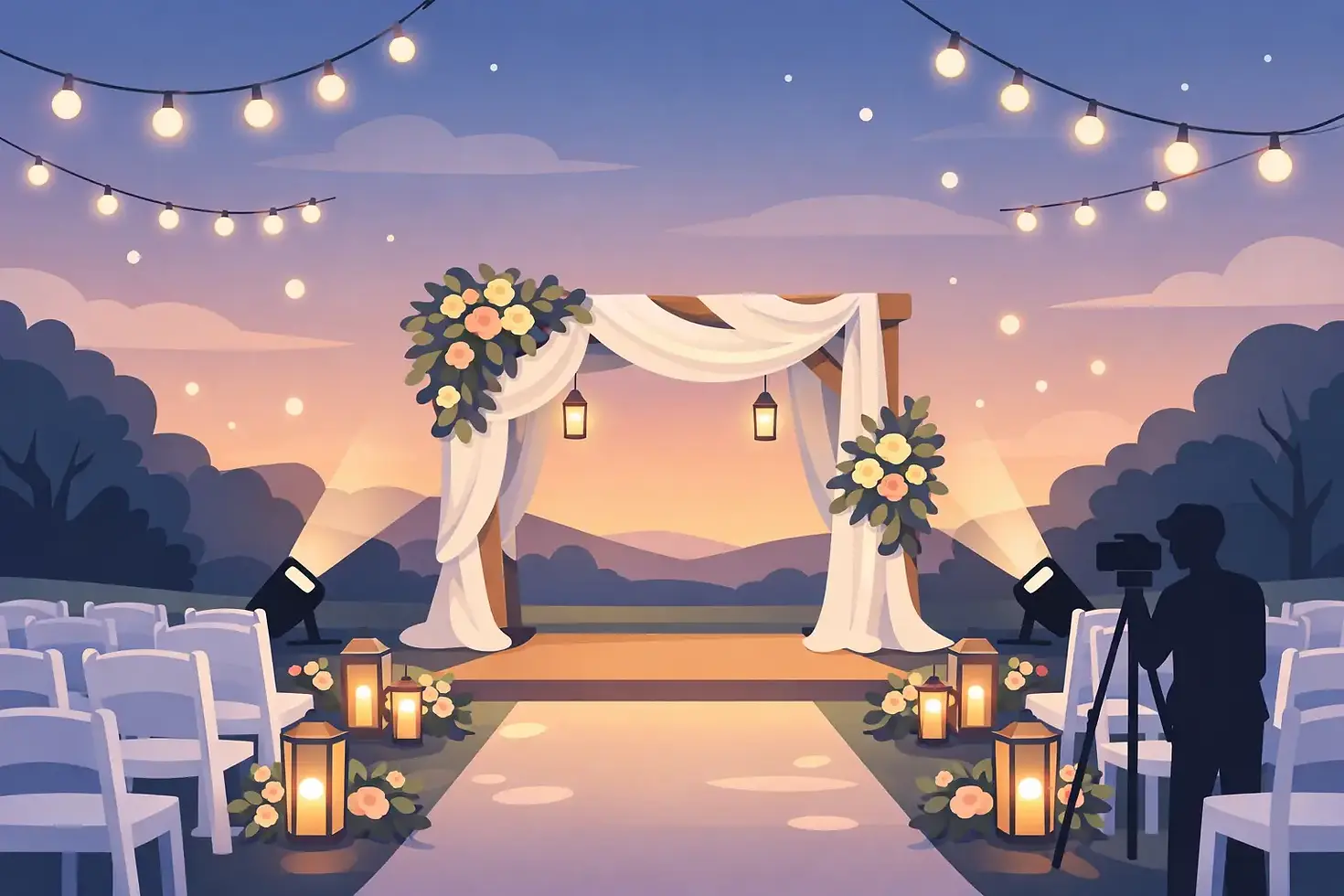
Wedding Ceremony Lighting That Photographs Beautifully
- jasonimages73
- 7 days ago
- 6 min read
A ceremony can look perfect to the eye and still be challenging to photograph. Harsh midday sun, a bright window behind the altar, or a single spotlight can change the mood of every image. Thoughtful wedding ceremony lighting gives you more than flattering photos. It helps your vows, expressions, and the people gathered around you feel as beautiful in your gallery as they did in the moment.
For Southern California couples, lighting decisions often begin with timing. Our sunshine is one of the reasons outdoor weddings are so appealing, but it can also create strong contrast and squinting if the ceremony is scheduled at the brightest part of the afternoon. With a little planning between your venue, coordinator, and photography team, you can create a ceremony setting that feels romantic, intentional, and comfortable for everyone.
Start With the Ceremony Time
The time on your invitation has a larger visual impact than most decor choices. Outdoor ceremonies held one to two hours before sunset usually offer softer light, gentler shadows, and a warm glow that photographs beautifully. This timing also gives guests a more comfortable experience, especially during warmer Los Angeles and Orange County months.
That said, a later ceremony is not the only answer. Some venues have shaded courtyards, tree cover, covered patios, or architecture that diffuses direct sun beautifully. A coastal ceremony may have softer light than an inland venue at the same hour, while a canyon or garden location can fall into shade earlier than expected. Your photographer can help assess the exact ceremony site, rather than relying on sunset time alone.
If a midday ceremony is necessary, look for open shade. The ideal setting is bright but indirect, such as the shaded side of a building, a covered terrace with plenty of ambient light, or a ceremony area beneath high, even tree cover. Avoid placing the couple under tiny patches of shade with bright sun nearby. Dappled light can create uneven spots across faces that are difficult to soften in photographs.
Consider Where the Sun Will Be During Your Vows
Before finalizing your layout, stand where you will stand and look toward your guests. If you are facing directly into the sun, you may be squinting through the most emotional part of the day. If the sun is directly behind you, your guests may struggle to see your expressions.
Often, the most flattering arrangement places the sun slightly behind or to the side of the couple. This can create a soft rim of light around hair and veils while keeping faces evenly illuminated. It also allows your photographer to capture both your reactions and your guests' faces without fighting extreme shadows.
A site visit, even a quick one at a similar time of day, can prevent surprises. Ask your planner or venue coordinator whether the ceremony space changes dramatically as the sun moves. Trees, nearby buildings, and seasonal shifts all affect where light lands.
Wedding Ceremony Lighting for Indoor Venues
Indoor ceremonies bring a different set of decisions. Ballrooms, churches, lofts, and private estates can feel intimate and elegant, but mixed lighting is common. Daylight from windows may be cool and blue, while chandeliers, sconces, and uplighting may be warm. The contrast can be beautiful when it is planned with intention.
Whenever possible, keep the light source around the ceremony consistent. If the room has stunning natural window light, embrace it and avoid adding bright colored uplights near the altar. If the ceremony is after dark in a ballroom, warm candlelight and carefully placed ambient lighting can create a rich, inviting atmosphere without making the space feel dim in photos.
Ask your venue or lighting team to turn on every planned fixture during your walkthrough. A room that appears softly lit in person may be darker on camera than expected, particularly if the aisle or ceremony backdrop is illuminated but faces are not. Your photographer can use professional lighting when needed, but a well-lit environment preserves the natural atmosphere and lets your images feel true to the room.
Be Careful With Colored Uplighting
Colored uplighting has its place, especially for a lively reception. During the ceremony, though, saturated purple, blue, green, or red lights can cast those tones onto skin, white dresses, floral arrangements, and the wedding party's attire. This is difficult to correct completely without changing the character of the entire scene.
Warm white lighting is the safest choice for a timeless look. Soft amber can feel romantic in a darker room, while neutral white works well in contemporary venues. If you love color, consider reserving it for the reception entrance, dance floor, or late-night celebration, after the ceremony and formal portraits are complete.
Light the Altar, Not Just the Backdrop
A floral arch, a wall of candles, or a statement installation can be breathtaking. But when the backdrop is much brighter than the couple, the camera has to make a choice. It may preserve the details behind you while leaving faces too dark, or brighten faces and allow the backdrop to glow more softly.
The solution is not necessarily more light everywhere. It is balanced light. Make sure the space where you will stand has gentle illumination from the front or side, especially for an indoor ceremony after sunset. This might come from dimmable overhead fixtures, soft side lighting placed discreetly outside the guests' sightlines, or existing venue lighting adjusted toward the ceremony area.
Candles add romance, texture, and depth, but they should support the overall design rather than carry the entire lighting plan. A large candle installation will look beautiful in close details and wide room images. It will not, on its own, light faces from several feet away. Combining candles with warm ambient light gives you both atmosphere and clarity.
Keep the Aisle and Guests in Mind
The walk down the aisle is full of fleeting moments: a parent taking a breath, a flower girl looking up, your partner seeing you for the first time. If the aisle is dramatically darker than the altar, those moments can feel visually disconnected from the rest of the ceremony.
For an evening ceremony, consider low, warm lighting along the aisle edges or enough overhead ambient light to define the path. Avoid placing lights where they shine directly upward under faces, which can create unflattering shadows. Safety matters, too. Guests, grandparents, and wedding party members should be able to move confidently as daylight fades.
Your guests are part of the visual story. When possible, avoid seating them with a bright sunset or uncovered window directly behind them. Their reactions during readings, vows, and the first kiss become some of the most meaningful images in a wedding gallery. Giving them even, soft light helps preserve those emotional frames.
Plan for the Transition From Ceremony to Portraits
A ceremony near sunset can be gorgeous, but it requires a realistic timeline. If the ceremony begins too close to sunset, it may be dark by the time family portraits or just-married photos begin. Build in a small buffer so you can enjoy a few quiet portraits in the best remaining light without feeling pulled away from cocktail hour for too long.
For winter weddings, sunset can arrive surprisingly early. For summer weddings, the light stays longer, but many locations remain bright and contrasty until later in the afternoon. A customized photography timeline accounts for your venue, season, family-photo needs, and the kind of portraits you value most.
At Jason Kim Photography, we approach timeline and lighting conversations as part of caring for the final story. The goal is never to make your day feel like a production. It is to give your wedding room to unfold naturally while ensuring the moments you will want to revisit are preserved with care.
Questions to Ask Your Venue and Lighting Team
Before you commit to a layout, ask whether the ceremony lights are dimmable, if colored uplighting can be turned off during vows, and whether a lighting technician will be present to make adjustments. Find out when exterior lights come on, whether candles are permitted, and if the venue has a preferred setup for an evening ceremony.
It is also wise to ask whether the venue can schedule a brief lighting check before guests arrive. A five-minute review with your planner, photographer, and lighting professional can catch a distracting spotlight, an overly dark aisle, or a color setting that does not match your vision.
Beautiful ceremony light is rarely about having the most equipment. It is about creating a setting where you can see one another clearly, your guests can share in the moment, and every photograph holds onto the warmth you felt when you said yes.


Comments